







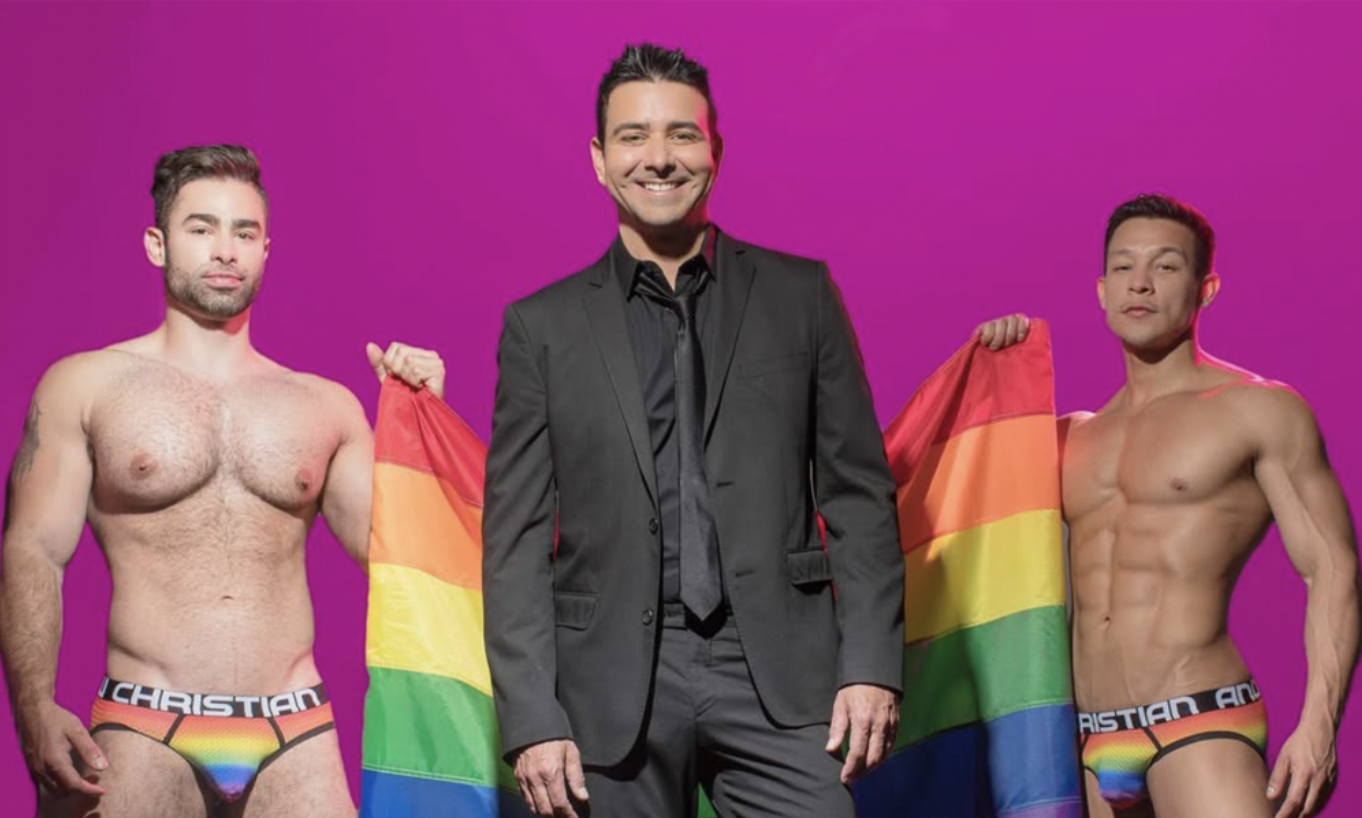


Anyone who ever packed their business into some brightly coloured stretch fabric with the name Andrew Christian around the waistband will be devastated. The eponymous founder whose underwear label helped define queer menswear (for slags!) for more than two decades, has closed the brand’s website and announced his retirement, bringing to an end a chapter many in the community describe as formative for visibility and self‑expression. According to the original report, the site now carries a simple banner: ‘Andrew Christian is now closed. Thank you for your loyalty and support over the years.’
The designer told Queerty and other outlets that a seismic shift in buying habits undercut the business model he had built, pointing to the rise of ultra‑low‑cost fast‑fashion marketplaces such as Shein and Temu where underwear can be purchased for a few dollars. Industry observers say those platforms have altered price expectations across younger cohorts, squeezing margins for independent labels that emphasise fit, quality and identity‑driven design.
Christian also cited the broader political climate as a factor, telling Queerty that it has become harder for companies that centre gay audiences to secure partnerships with larger firms, a dynamic he said contributed to the decision to close. The designer framed his exit as a combination of economic pressure and cultural headwinds.
In social posts shared as the site went dark, Christian offered a personal farewell that blended gratitude with melancholy: ‘Today, with tears, gratitude, and a heart full of memories, we close the Andrew Christian website. It’s with a heavy but deeply grateful heart that we say goodbye.’ He thanked customers directly: ‘You gave this brand its soul. The site may go dark, this chapter may end… but the love, the stories, and the community we built together will stay with us forever.’ Those messages were echoed on Instagram, where he wrote: ‘As I take this final bow, I just want to say thank you to everyone who believed in me, my work, and the world we created together.’
The brand was founded in the late 1990s and later expanding into swimwear, sportswear and multiple sub‑labels and launced a final collection called Bespoke this year.
For many customers and peers, the loss is cultural as well as commercial: the brand’s campaigns and cuts provided confidence and a sense of being seen. Commentators ask how independent queer‑owned labels can survive in a market normalised to $3 throwaways, and what mechanisms , from conscious buying to wholesale partnerships and policy change , might protect creators who invest in quality and community over volume. According to the original and related reports, those questions now sit at the centre of debates about the future of queer fashion.
Christian closed his farewell notes by reiterating the personal meaning of the work and the community it fostered: ‘Thank you for standing with me. Thank you for believing in me. Thank you for being part of this legacy.’ The announcement leaves a legacy worth interrogating , not only the garments and campaigns but the economic and cultural conditions that allowed the brand to flourish and now leave a void.
Source: Noah Wire Services